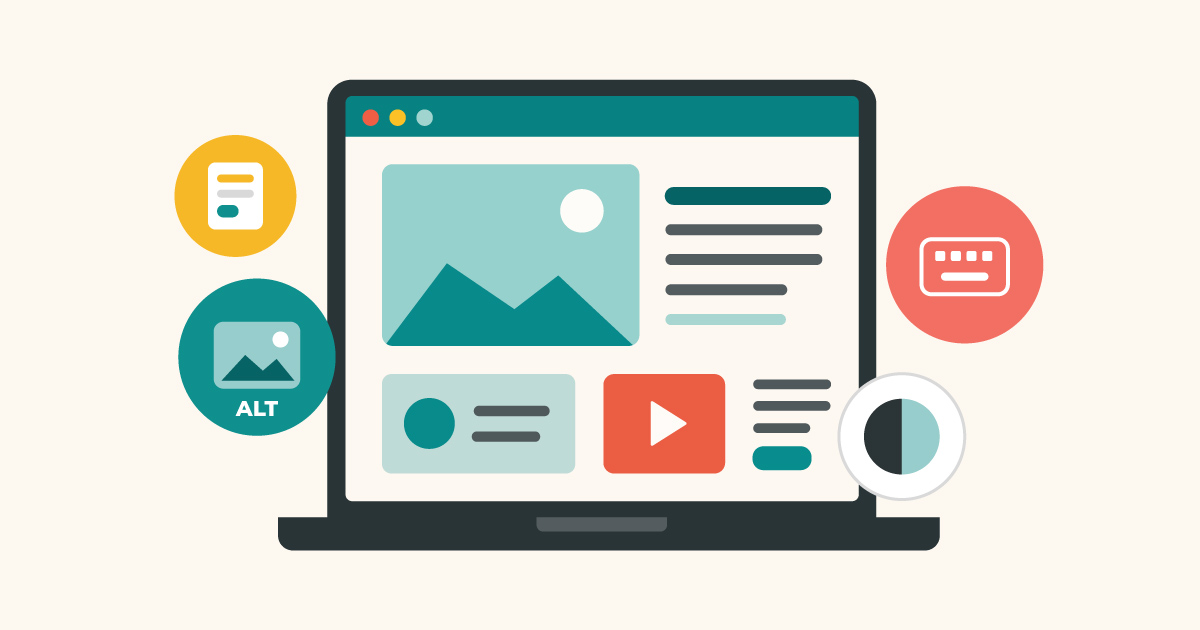
In the modern age of “just make my website work,” businesses can miss the nuances that make navigation and content access easy for everyone.
Since the early days of the World Wide Web, organizations have used websites to highlight their products and services with the goal of increasing visibility and expanding their reach. And those early days really were the Wild West of the web. Almost anything went when it came to design, navigation, functionality, and accessibility.
As the web evolved, so did the understanding that digital information should be available to as many people as possible.
In the 1990s, the Web Content Accessibility Guidelines (WCAG) were developed through the World Wide Web Consortium (W3C) to establish recommendations for making web content more accessible to people with disabilities.
Today, accessibility has become an important consideration for almost every organization with a website. If someone has difficulty navigating or accessing content on your site, your business may face increased compliance and litigation risk. But there’s another side of accessibility that sometimes gets lost in that conversation: you may also be making it harder for someone to become your customer.
If a visitor can’t read your content, navigate your menu, complete a form, understand an image, or purchase a product, that’s not only an accessibility issue. It’s a customer experience issue.
What Does Website Accessibility Mean?
Website accessibility means designing and maintaining a website so people with different abilities can effectively use it. This includes individuals with visual, auditory, physical, speech, cognitive, or neurological disabilities, as well as those experiencing temporary or situational limitations.
Here are a few everyday situations where accessibility makes a difference:
- Someone navigating a website using only a keyboard
- A customer relying on a screen reader to access online content
- A person with a broken arm who temporarily cannot use a mouse
- Someone watching a video in an environment where they cannot hear the audio
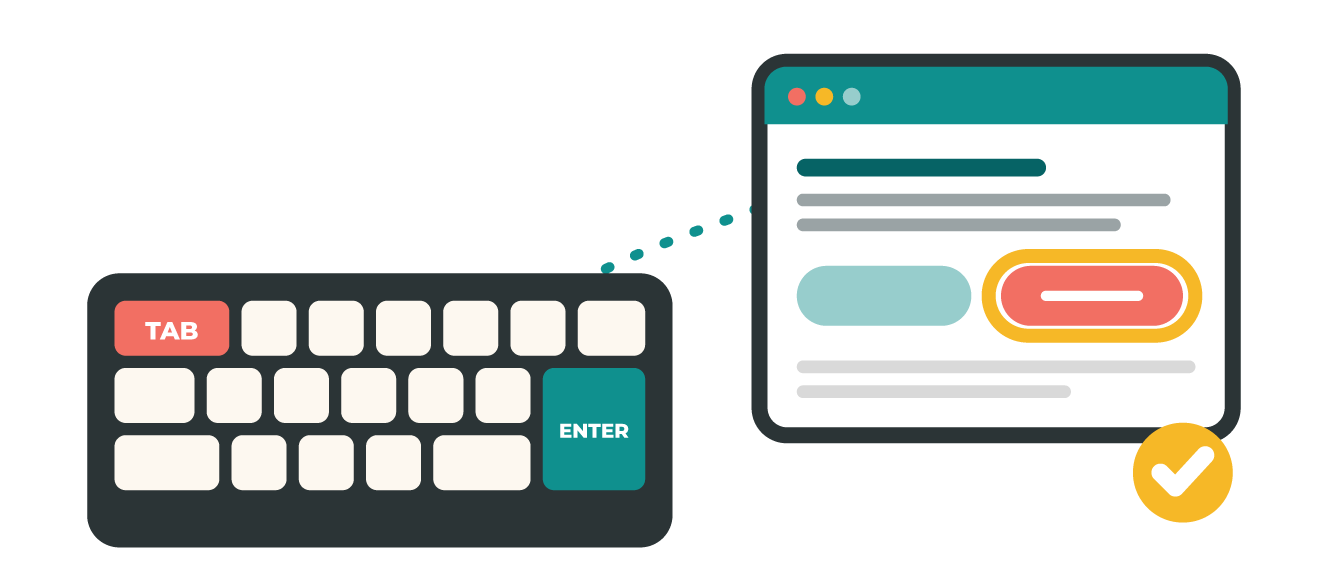
Good accessibility practices can make these experiences easier. Many website improvements, such as clear navigation and properly structured headings, are also common elements of good website design that create a more intuitive and user-friendly experience for everyone.
That’s why accessibility should be more than a compliance checklist. It should be an essential part of the overall user experience.
Why Website Accessibility Matters for Businesses
Your website is often one of the first interactions someone has with your organization. Whether they’re researching services or scheduling an appointment, your website plays an important role in connecting your business with customers.
When parts of that experience aren’t accessible, you may be unintentionally creating barriers for the people you’re trying to reach. This is especially important in industries where customers rely on websites for everyday activities such as:
- Retail: browsing and purchasing products
- Restaurants: viewing menus and making reservations
- Hospitality: exploring accommodations and booking stays
- Healthcare: finding providers, scheduling appointments, and accessing information
Accessibility isn’t a one-time project. Websites are constantly evolving as new content is published, forms are updated, and website platforms and plugins change. Any of these updates can introduce new accessibility issues, making it important to integrate accessibility best practices into ongoing website maintenance rather than treating them as a one-time fix.
Accessibility Can Help Reduce Compliance Risk
Website accessibility issues can expose your business to complaints and potential litigation.
While no accessibility solution can guarantee protection from lawsuits, ongoing monitoring and remediation can help reduce risk, improve alignment with recognized standards like WCAG, and demonstrate your commitment to accessibility.
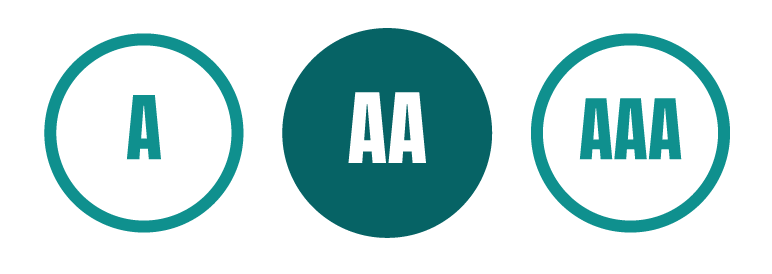
What does WCAG compliance actually mean?
Level AA is the common target for most organizations.
Rather than waiting until a problem arises, businesses can proactively address accessibility concerns and incorporate best practices into future website changes.
That ongoing effort is an important part of managing accessibility risk.
Website Accessibility Can Also Support SEO
There’s also an interesting crossover between accessibility and search engine optimization (SEO).
Many accessibility best practices involve providing websites with clearer structure and more descriptive information. Those same practices can also make content easier for search engines to understand.
For example:
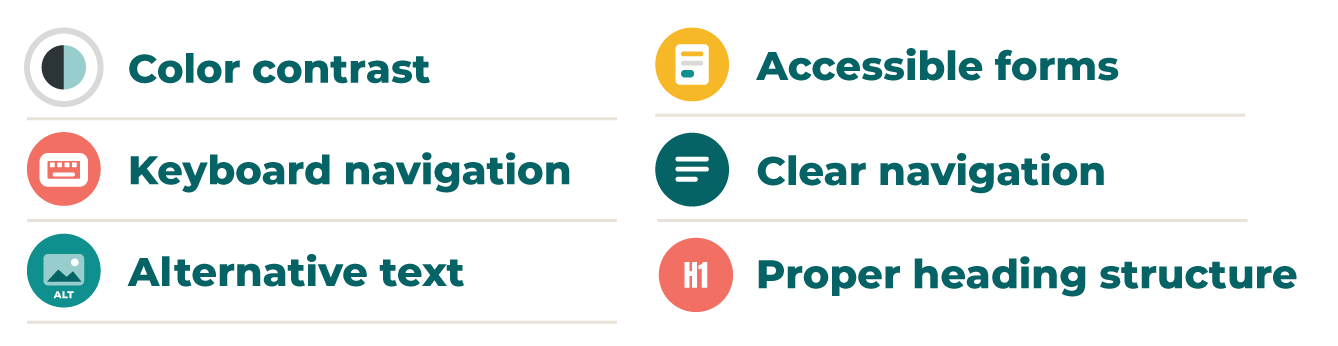
- Clear page titles: help visitors and search engines understand the purpose of a page
- Proper heading structure: organizes information into logical sections
- Descriptive link text: provides context about where a link will take someone
- Alternative text: helps explain the purpose of meaningful images
- Logical navigation: makes important content easier to find
- Clear, concise content: makes information easier to understand
Accessibility and SEO aren’t the same thing, and an accessible website isn’t automatically going to rank higher simply because it is accessible. But many of the fundamentals overlap.
At the end of the day, both disciplines benefit from websites that are organized, understandable, and easy to navigate.
What About Accessibility and AI Search?
As more people turn to AI-powered search tools to research products, services, and businesses, it’s increasingly important to structure website content so both people and technology can easily understand it.
Clear headings, descriptive content, logical page structure, and meaningful image descriptions all help provide context. FAQ sections are especially valuable because they pair common questions with concise answers, making information easier for visitors to find and search technologies to interpret.
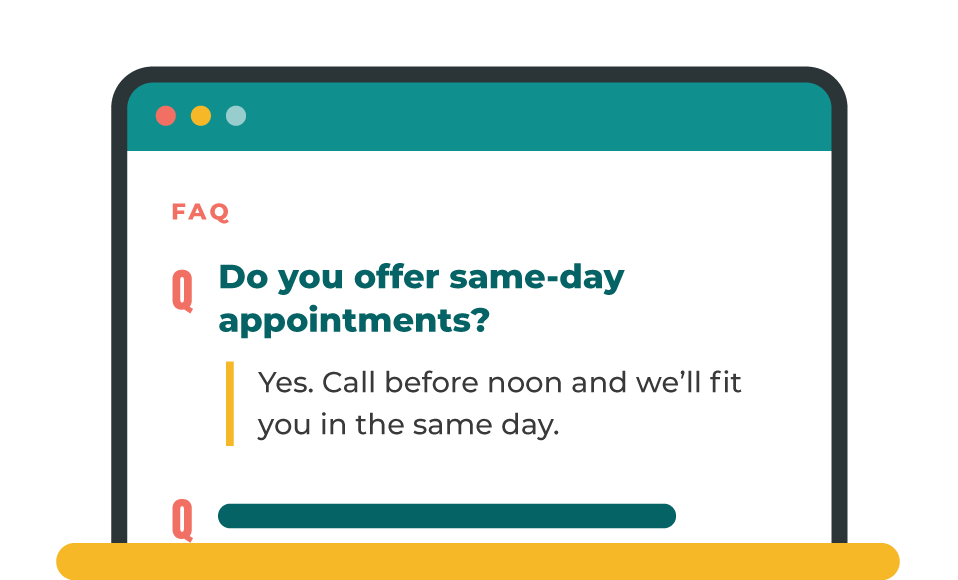
By creating clear, well-organized content, businesses can strengthen their visibility in traditional and AI-powered search while improving the overall user experience.
Make Accessibility Part of Your Website Strategy
At Small Dog Creative, we take accessibility seriously. We partner with providers like AudioEye to offer continuous accessibility monitoring.
Our approach goes beyond installing a tool. We believe accessibility should be an ongoing process that evolves alongside your website, helping maintain a more accessible experience as content, technology, and user needs change.
The AudioEye program available through Small Dog Creative includes:
- 24/7 accessibility monitoring: continuously monitors your website for potential accessibility issues
- Automated remediation: automates fixes for up to 50% of detected issues
- Compliance reporting: provides accessibility insights through a centralized dashboard
- Manual remediation recommendations: identifies issues that require additional attention
- Ongoing reviews: includes a first-month manual report review, followed by quarterly reviews
- Optional expert services: offers additional human expert reviews and legal support
While technology can address many accessibility issues, automated tools alone can’t catch everything. That’s why we combine accessibility technology with ongoing manual oversight and thoughtful website design to support a long-term approach to accessibility.
Is Your Website Accessible?
There are a lot of nuances to website accessibility, and no two websites are exactly alike. We’re here to help you make accessibility part of your ongoing website strategy.
Send us a note, and we’ll set up a call to discuss your website and the options available.